Home Peculiar
Category:

Peculiar

Advertisement

In a world that increasingly values efficiency, standardisation, and scale, there is something deeply reassuring about the eccentric. The person who has devoted their life to a pursuit so obscure, so impractical, so wonderfully odd, that it defies all economic logic. These are the people who keep the strange crafts alive, and they are the soul of the peculiar.

Take the willow weaver. In a water meadow in Somerset, you might find an elderly man, standing waist-deep in a pool of water, cutting rods of willow with a curved knife. He has been doing this for sixty years. He knows the names of every variety: Black Maul, Dicky Meadows, Golden Willow. He will take the rods home, soak them, and weave them into baskets, eel traps, and living sculptures. His craft is ancient, predating the Romans. It is also almost entirely irrelevant to the modern economy. And yet, he persists, because the willow calls to him.

Or consider the colour-blind artist. A painter in Cornwall who sees the world in shades of grey. He cannot perceive the colours he works with, but he has learned their names, their properties, their relationships. He paints by system and by feel, creating works of vibrant, complex colour that he will never fully see. His art is a constant negotiation with his own neurology, a triumph of will over perception.

Pages: 1 2

Advertisement

For sixty-five years, a simple, slightly chaotic television programme has been quietly shaping the creative lives of British children. It has no flashy graphics, no celebrity judges, no expensive prizes. It has a garden, a shed, a pet, and a stack of sticky-backed plastic. It is Blue Peter, and it is a national treasure.

The formula is deceptively simple. A group of presenters, usually two women and a man, introduce a series of items: a film about a child with an unusual hobby, an interview with a famous person, and, of course, the “make.” It is the make that has become legendary. From the infamous Tracy Island (made from washing-up bottles and papier-mâché, and famously sold out of all necessary materials after the show aired) to advent crowns, Christmas decorations, and models of the latest Blue Peter badge, generations of children have been sent scrambling for sticky tape and cereal boxes.

The genius of the Blue Peter make is its accessibility. The items are made from household junk: kitchen roll tubes, egg cartons, old yoghurt pots. The message is clear: you don’t need expensive materials to be creative. You just need imagination, patience, and a bit of Blue Peter know-how. The presenters, often wrestling with recalcitrant glue or collapsing cardboard, are reassuringly fallible. If they can do it, so can you.

Pages: 1 2

Advertisement

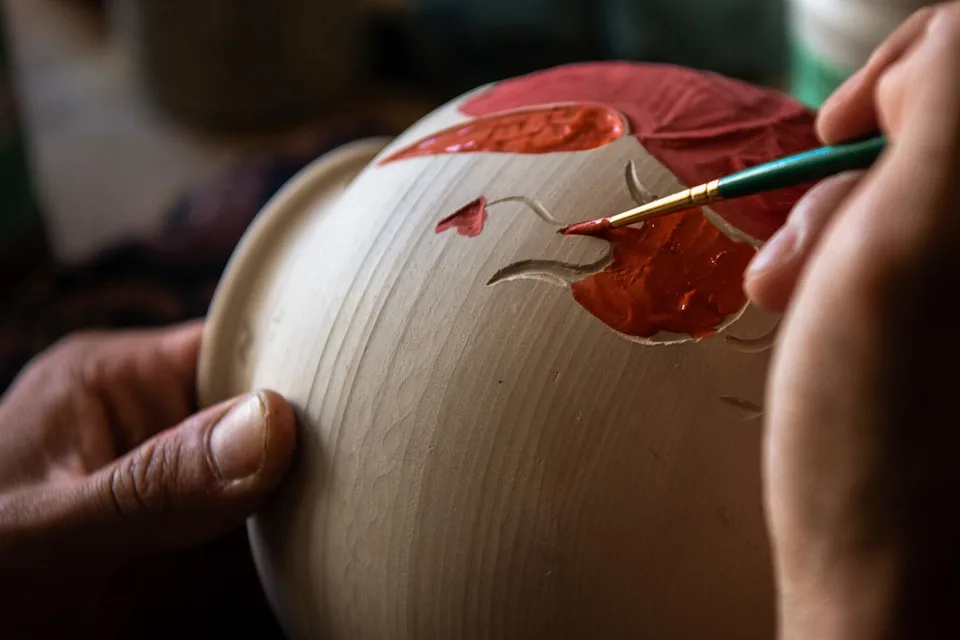
He is a figure from a bygone age, or so we thought. The dandy. A man who takes pleasure in making things, in craftsmanship, in the slow, deliberate creation of beauty. But the dandy is back, and he has swapped his silk cravat for a leather apron. He is in the workshop, at the potter’s wheel, at the carpenter’s bench.

The return of the dandy is part of a broader revival of interest in traditional crafts. But it has a particular flavour. It is about reclaiming a certain kind of masculinity, one that is not about brute strength or emotional stoicism, but about skill, patience, and creation. It is about the quiet pride of a well-made dovetail joint, the satisfaction of a perfectly centred pot, the beauty of a hand-carved spoon.

For a generation, men were encouraged to pursue careers in offices, to work with their heads rather than their hands. The crafts were relegated to the status of hobbies, or worse, to the realm of the unambitious. But the tide has turned. The office, with its open-plan anxieties and its endless meetings, has lost some of its lustre. The workshop offers an alternative: a place of focus, of tangible results, of genuine skill.

Pages: 1 2

Advertisement

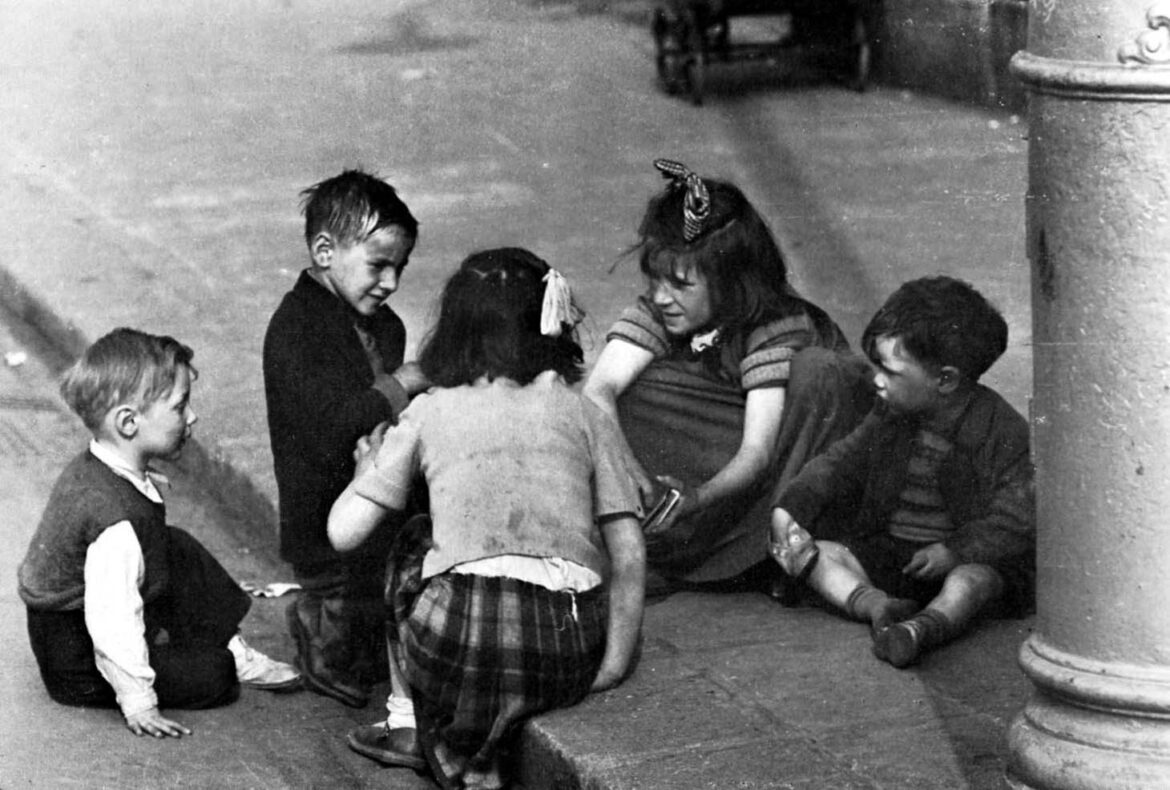
Imagine a childhood without screens. Without streaming, without gaming, without endless scrolling. For a child in 1950s Britain, entertainment had to be found, not downloaded. And for many, it was found in the pages of a stamp album.

The 1950s was the golden age of collecting. It was a decade of penny packets and patience. Children collected stamps, of course, but also cigarette cards, matchbox labels, bird feathers, and football programmes. The world was a vast museum, and everything in it was a potential exhibit.

The stamp album was a passport to elsewhere. A boy in a grey, post-war suburb could hold a stamp from the sun-drenched beaches of the Gold Coast, or the snowy peaks of Switzerland, or the mysterious, far-off land of Azerbaijan. Each tiny rectangle was a window onto a world he had never seen, a world of exotic names and strange, bright colours. He would soak the stamps off envelopes, dry them carefully on the windowsill, and hinge them into their allotted spaces in the album. The world was being organised, catalogued, collected.

Pages: 1 2

Advertisement

There is a quiet corner of the economy that rarely makes the headlines. It deals in tiny things: stamps no bigger than a fingernail, coins that jingle in a pocket, postcards with faded messages from a century ago. It is the world of nostalgic hobbies, and it is worth a surprising amount of money.

We tend to think of collecting as a harmless eccentricity, a way for retired gentlemen to pass the time. But the market for collectables is vast and serious. Rare stamps can sell for hundreds of thousands of pounds. A single coin can be worth a small fortune. A first-edition book, a vintage toy, a piece of railway memorabilia – these are not just dusty relics; they are assets.

The appeal of these peculiar pastimes is complex. Part of it is the thrill of the hunt. The search for a missing stamp, the rummage through a box of junk at a car boot sale, the hope of finding a treasure disguised as trash. It is a detective story played out in attics and auction houses.

Part of it is the connection to history. A stamp from a long-vanished empire, a coin minted in the year of a great battle, a postcard sent from the trenches – these objects are tangible links to the past. They carry stories. They are history you can hold.

Pages: 1 2

Advertisement