Home Author
Author

Odell Chauncey

Advertisement

The UK technology sector continues to grow rapidly, attracting developers, engineers, and IT specialists from around the world. However, getting an interview does not guarantee receiving an offer. British employers evaluate not only technical knowledge but also communication skills, professionalism, and the ability to work within a team.

Here are some of the most common mistakes candidates make during IT interviews in the UK — and how you can avoid them.


1. Focusing on Technologies Instead of Results

Many candidates talk extensively about the programming languages or frameworks they have used, but fail to explain what impact their work actually had.

In the UK, interviewers usually want to understand:

  • what problem you solved

  • what your personal responsibility was

  • what results your work produced

Weak example:

“I worked with Java and helped build backend services.”

Better example:

“I redesigned a Java-based service architecture that reduced system latency by 30% and improved reliability during peak traffic.”

British employers appreciate clear, measurable achievements, not just a list of technologies.

2. Not Researching the Company

Another common mistake is arriving at an interview without knowing much about the organisation.

In UK interviews, it is very common to hear questions like:

  • “Why do you want to work for us?”

  • “What interests you about this role?”

  • “What do you know about our product or services?”

If your answer sounds generic, it may give the impression that you applied to many companies without genuine interest.

Before the interview:

  • review the company’s website

  • understand their main product or services

  • learn about their technology stack if possible

Preparation shows motivation and professionalism.

3. Poor Communication of Technical Ideas

Even highly skilled developers can struggle during interviews if they cannot clearly explain their work.

In the UK tech environment, engineers are expected to collaborate with:

  • product managers

  • designers

  • other development teams

  • non-technical stakeholders

This means you must be able to explain technical solutions clearly and confidently.

Try to:

  • describe complex concepts in simple terms

  • structure your explanations logically

  • avoid unnecessary jargon unless it is relevant

Strong communication skills often differentiate successful candidates.


4. Speaking Negatively About Previous Employers

Criticising former employers or managers is considered unprofessional in most UK interviews.

Even if your previous workplace had challenges, it is important to present your experience constructively.

Instead of focusing on negative aspects, explain what you learned and why you are looking for a new opportunity.

For example:

“I learned a lot in my previous role, but I’m now looking for a company where I can work on larger-scale systems and continue developing my technical skills.”

This approach demonstrates maturity and professionalism.

5. Giving Unstructured Answers

Many interview questions in the UK are behavioural, meaning they focus on real situations from your experience.

Typical questions include:

  • “Tell me about a time you solved a difficult technical problem.”

  • “Describe a situation where you had to resolve a conflict in a team.”

  • “Give an example of a challenging project you worked on.”

The most effective way to answer these questions is the STAR method:

Situation – describe the context

Task – explain your responsibility

Action – describe what you did

Result – explain the outcome

Structured answers make it easier for interviewers to understand your role and evaluate your experience.

6. Not Asking Questions at the End of the Interview

At the end of most interviews in the UK, the interviewer will ask:

“Do you have any questions for us?”

Many candidates underestimate the importance of this moment.

Saying “No” can make you appear uninterested.

Instead, prepare thoughtful questions such as:

  • How is success measured in this role?

  • What are the biggest challenges the team is currently facing?

  • How does the company support learning and professional development?

  • What does the onboarding process look like?

These questions demonstrate engagement and curiosity.


7. Underestimating Cultural Fit

UK companies often place strong emphasis on team fit and professional attitude.

Even highly technical candidates may not receive an offer if they appear difficult to work with or unwilling to collaborate.

Employers typically evaluate:

  • teamwork

  • openness to feedback

  • reliability

  • problem-solving mindset

Candidates who show both competence and a positive professional attitude often stand out.


Final Thoughts

Technical knowledge is essential for IT roles in the UK, but it is rarely the only factor that determines hiring decisions.

To succeed in interviews, candidates should focus on:

demonstrating measurable results

  • preparing thoroughly for the company and role

  • communicating clearly and confidently

  • showing professionalism and teamwork

By combining strong technical skills with effective communication and preparation, you significantly increase your chances of receiving a job offer in the UK tech industry.




Advertisement

In a world that increasingly values efficiency, standardisation, and scale, there is something deeply reassuring about the eccentric. The person who has devoted their life to a pursuit so obscure, so impractical, so wonderfully odd, that it defies all economic logic. These are the people who keep the strange crafts alive, and they are the soul of the peculiar.

Take the willow weaver. In a water meadow in Somerset, you might find an elderly man, standing waist-deep in a pool of water, cutting rods of willow with a curved knife. He has been doing this for sixty years. He knows the names of every variety: Black Maul, Dicky Meadows, Golden Willow. He will take the rods home, soak them, and weave them into baskets, eel traps, and living sculptures. His craft is ancient, predating the Romans. It is also almost entirely irrelevant to the modern economy. And yet, he persists, because the willow calls to him.

Or consider the colour-blind artist. A painter in Cornwall who sees the world in shades of grey. He cannot perceive the colours he works with, but he has learned their names, their properties, their relationships. He paints by system and by feel, creating works of vibrant, complex colour that he will never fully see. His art is a constant negotiation with his own neurology, a triumph of will over perception.

Pages: 1 2

Advertisement

For sixty-five years, a simple, slightly chaotic television programme has been quietly shaping the creative lives of British children. It has no flashy graphics, no celebrity judges, no expensive prizes. It has a garden, a shed, a pet, and a stack of sticky-backed plastic. It is Blue Peter, and it is a national treasure.

The formula is deceptively simple. A group of presenters, usually two women and a man, introduce a series of items: a film about a child with an unusual hobby, an interview with a famous person, and, of course, the “make.” It is the make that has become legendary. From the infamous Tracy Island (made from washing-up bottles and papier-mâché, and famously sold out of all necessary materials after the show aired) to advent crowns, Christmas decorations, and models of the latest Blue Peter badge, generations of children have been sent scrambling for sticky tape and cereal boxes.

The genius of the Blue Peter make is its accessibility. The items are made from household junk: kitchen roll tubes, egg cartons, old yoghurt pots. The message is clear: you don’t need expensive materials to be creative. You just need imagination, patience, and a bit of Blue Peter know-how. The presenters, often wrestling with recalcitrant glue or collapsing cardboard, are reassuringly fallible. If they can do it, so can you.

Pages: 1 2

Advertisement

He is a figure from a bygone age, or so we thought. The dandy. A man who takes pleasure in making things, in craftsmanship, in the slow, deliberate creation of beauty. But the dandy is back, and he has swapped his silk cravat for a leather apron. He is in the workshop, at the potter’s wheel, at the carpenter’s bench.

The return of the dandy is part of a broader revival of interest in traditional crafts. But it has a particular flavour. It is about reclaiming a certain kind of masculinity, one that is not about brute strength or emotional stoicism, but about skill, patience, and creation. It is about the quiet pride of a well-made dovetail joint, the satisfaction of a perfectly centred pot, the beauty of a hand-carved spoon.

For a generation, men were encouraged to pursue careers in offices, to work with their heads rather than their hands. The crafts were relegated to the status of hobbies, or worse, to the realm of the unambitious. But the tide has turned. The office, with its open-plan anxieties and its endless meetings, has lost some of its lustre. The workshop offers an alternative: a place of focus, of tangible results, of genuine skill.

Pages: 1 2

Advertisement

Imagine a childhood without screens. Without streaming, without gaming, without endless scrolling. For a child in 1950s Britain, entertainment had to be found, not downloaded. And for many, it was found in the pages of a stamp album.

The 1950s was the golden age of collecting. It was a decade of penny packets and patience. Children collected stamps, of course, but also cigarette cards, matchbox labels, bird feathers, and football programmes. The world was a vast museum, and everything in it was a potential exhibit.

The stamp album was a passport to elsewhere. A boy in a grey, post-war suburb could hold a stamp from the sun-drenched beaches of the Gold Coast, or the snowy peaks of Switzerland, or the mysterious, far-off land of Azerbaijan. Each tiny rectangle was a window onto a world he had never seen, a world of exotic names and strange, bright colours. He would soak the stamps off envelopes, dry them carefully on the windowsill, and hinge them into their allotted spaces in the album. The world was being organised, catalogued, collected.

Pages: 1 2

Advertisement

There is a quiet corner of the economy that rarely makes the headlines. It deals in tiny things: stamps no bigger than a fingernail, coins that jingle in a pocket, postcards with faded messages from a century ago. It is the world of nostalgic hobbies, and it is worth a surprising amount of money.

We tend to think of collecting as a harmless eccentricity, a way for retired gentlemen to pass the time. But the market for collectables is vast and serious. Rare stamps can sell for hundreds of thousands of pounds. A single coin can be worth a small fortune. A first-edition book, a vintage toy, a piece of railway memorabilia – these are not just dusty relics; they are assets.

The appeal of these peculiar pastimes is complex. Part of it is the thrill of the hunt. The search for a missing stamp, the rummage through a box of junk at a car boot sale, the hope of finding a treasure disguised as trash. It is a detective story played out in attics and auction houses.

Part of it is the connection to history. A stamp from a long-vanished empire, a coin minted in the year of a great battle, a postcard sent from the trenches – these objects are tangible links to the past. They carry stories. They are history you can hold.

Pages: 1 2

Advertisement

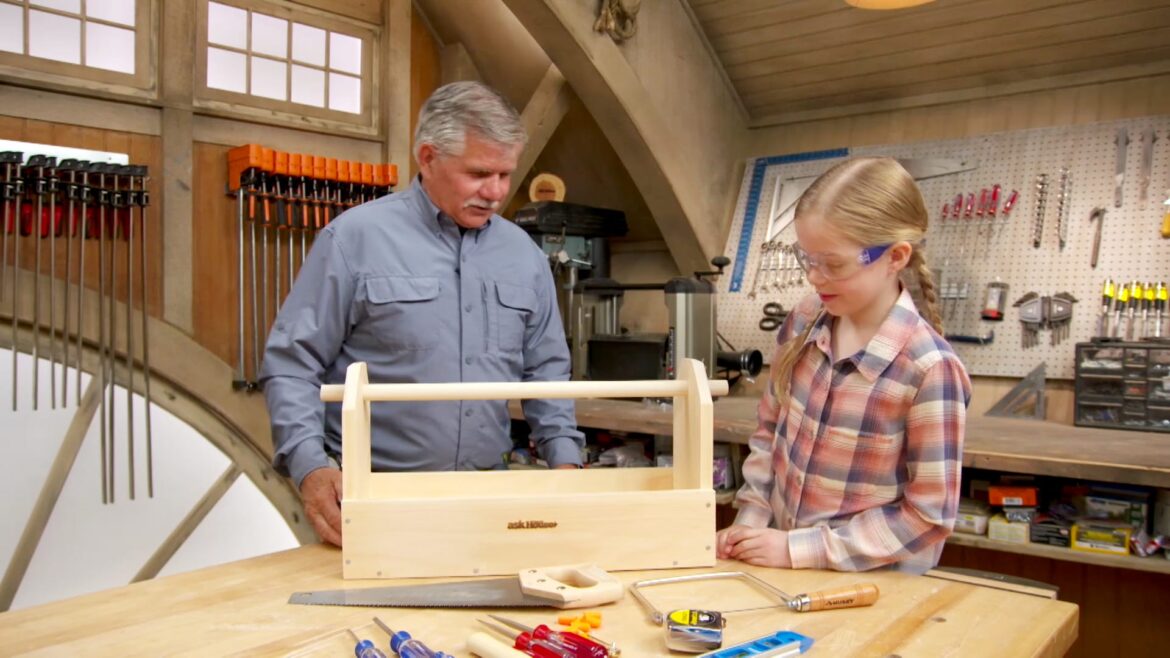
In a community workshop in Wokingham, a teenager is learning to use a hammer. It sounds simple, but it is a skill that is becoming increasingly rare. For the first time, he is driving a nail into a piece of wood, feeling the satisfying thud of the hammer connecting, watching the nail disappear into the grain. He is building a bird box, but he is also building something more important: competence, confidence, and a connection to a tradition of making.

This is the Toolbox for the Future project, and it is one of a growing number of initiatives across the country designed to teach practical skills to a new generation. The need is urgent. For decades, practical subjects have been downgraded in schools, squeezed out by an academic curriculum that prioritises exams over experience. The result is a generation of young people who can code but cannot cook, who can navigate a smartphone but cannot change a plug.

The consequences of this skills gap are already being felt. Employers in construction, manufacturing, and the trades struggle to find young people with basic practical abilities. At home, young adults are unable to perform the simplest repairs, relying on expensive professionals or, worse, attempting dangerous DIY with inappropriate tools.

Pages: 1 2

Advertisement

The official working day began at nine. But by nine-fifteen, the laptop was on the kitchen table, the emails were loading, and the shed was calling. Just a quick look. Just to check on the seedlings. Just to tidy up a bit. Twenty minutes later, hands covered in compost, the secret gardener returns to the screen, hoping the video conference hasn’t started yet. This is the reality of hybrid working for thousands of Britons.

The phenomenon is widespread, if rarely admitted. With the boundaries between work and home blurred, the temptations of the garden have become harder to resist. A quick trip to the shed for a tool becomes a half-hour of potting. A glance out the window at a sunny day becomes a sudden urge to mow the lawn. The work is still there, waiting, but the garden offers a more immediate, more tangible satisfaction.

The confessions are whispered among friends. “I planted three rows of carrots during a particularly dull webinar.” “I painted the fence in my lunch break.” “I’ve been ‘working from home’ for two years, and my shed is now better equipped than my home office.” There is a hint of guilt in these confessions, but also a touch of pride. They have stolen time from the corporation and given it to themselves, to their garden, to their sanity.

Pages: 1 2

Advertisement

It is a structure of profound cultural significance, often overlooked, sometimes mocked, but deeply loved. The garden shed. For generations, it was the domain of the husband, a place to escape the domestic fray, to potter, to store rusty tools, and to think. But the shed has evolved. It has undergone a metamorphosis as dramatic as any in the natural world. It has become a home bar.

This is the great British shed transformation. All across the land, sheds are being cleared of their cobwebs and clutter, insulated, wired for electricity, and fitted with bar stools. The lawnmower has been evicted; the cocktail shaker has moved in. The shed is no longer a place of storage; it is a place of entertainment.

The reasons for this transformation are not hard to find. A home bar offers the pleasures of a night out without the cost, the travel, or the need to find a babysitter. It is your own private pub, with your own choice of music, your own selection of drinks, and your own guest list. It is a space that is separate from the house, a destination in the garden, a place where the rules of domestic life can be relaxed.

Pages: 1 2

Advertisement

There is a particular smell that greets you at the entrance of a B&Q warehouse. It is a complex aroma of fresh timber, paint, fertilizer, and optimism. It is the smell of possibility. And over the past few years, millions of Britons have been drawn to it, filling their trolleys with plasterboard, paintbrushes, and power tools. The DIY boom is real, and it has transformed our relationship with our homes.

The boom had many fathers. The lockdowns, of course, played a huge part. With nowhere to go and nothing to do, we turned our attention to our immediate surroundings. That leaking tap we had ignored for years suddenly became a project. The bare wall in the hallway called out for a gallery of our own making. The garden, once a place for occasional sitting, became a landscape to be shaped and tamed.

But the trend predates the pandemic. It is rooted in a deeper shift in how we view our homes. They are no longer just places to eat and sleep; they are expressions of ourselves. We want them to be unique, to reflect our tastes, to tell our story. And the only way to achieve that, for most of us, is to do it ourselves. We cannot afford an interior designer, but we can afford a weekend and a pot of paint.

Pages: 1 2

Advertisement

Newer Posts