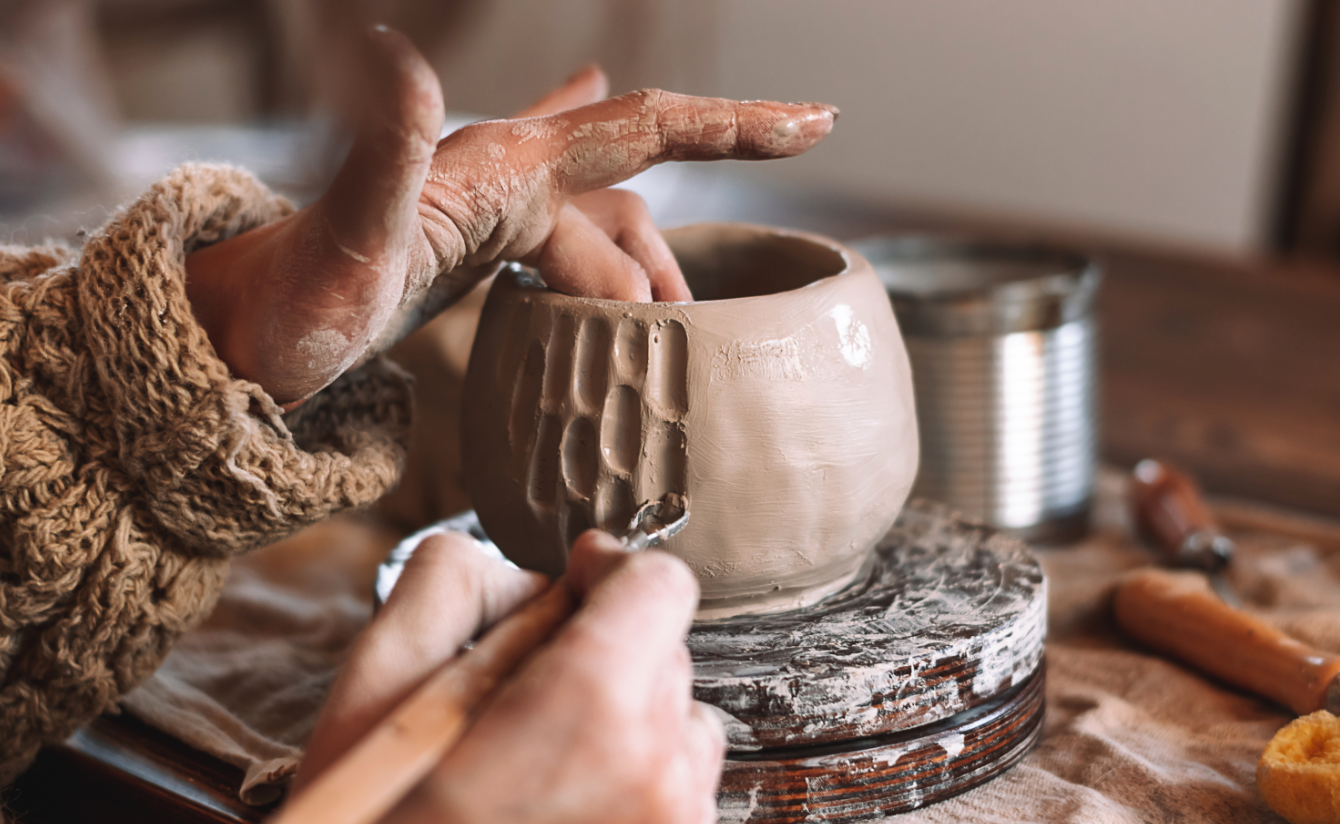
There is a quiet revolution happening in living rooms across Britain. It involves yarn, clay, paper, and a lot of patience. It is the resurgence of the handmade, and it is reclaiming territory lost to the fast, the disposable, and the mass-produced.
Advertisement
For a generation, “making” was something you outgrew. You started with playdough and finger painting, progressed to Blue Peter models made of sticky-backed plastic, and then, somewhere around adolescence, you put away childish things. The message was clear: creative hobbies were for children, or for retirees. Real adults bought things. They consumed.
But the tide has turned. The rise of the “make-off” – a playful nod to the great British habit of competitive creation – signals a profound shift in values. We are tired of the homogeneity of the high street, tired of furniture that disintegrates after a year, tired of clothes that are identical to everyone else’s. We want things with a story. And the best story of all is “I made this.”
The reasons are as varied as the crafts themselves. For some, it is about sustainability, a way to push back against the environmental cost of fast fashion and flat-pack waste. Mending a jumper, repainting a chair, or knitting a scarf from natural wool is a small act of defiance. For others, it is about mental health. In a world of infinite digital choices, the finite, tactile process of creating something with your hands is deeply soothing. The repetitive motion of knitting, the focus required for pottery, the precision of embroidery – these are forms of meditation that leave something tangible behind.